The best time to visit Madeira
Any month. Summer is for the sea, long days and nights out; winter is mild, quieter and full of Christmas. I am from Madeira and I love both, summer a little more.
My quick take
Younger and here for beaches, dinners out and nightlife? Come in summer. Want to get to know the island, its food and its traditions? Come in winter, ideally in December.
- Summer, June to September
- 24 to 27 °C by day, sea around 24 °C, about 14 hours of daylight
- Winter, November to February
- 20 to 23 °C by day, sea around 18 °C, about 10 hours of daylight
- Wettest months
- October to December in Funchal; the north and the mountains get more rain all year
- Coldest it gets
- 8.5 °C, the lowest night in Funchal in 30 years. No frost on the coast
The best time to visit Madeira depends on what you want from the trip, because the island has no bad season. Funchal averages 20 °C by day in January and 26.8 °C in August (IPMA), so winter is mild and summer is warm without being too hot. Summer, from June to September, is the time for swimming, long evenings and nights out. Winter, from November to February, brings cooler sea, shorter days and more rain, but also Christmas, New Year and a slower island that is easier to get to know.
People ask me this more than anything else. I grew up here and I still come back several times a year, in every season, and my answer is always the same: both, but for different people.
Summer vs winter in Madeira
Climate figures are IPMA’s averages for Funchal; sea temperatures are Visit Madeira’s.
| What | Summer June to September | Winter November to February |
|---|---|---|
| Daytime high in Funchal | 24 to 27 °C | 20 to 23 °C |
| Night-time low | 18 to 21 °C | 14 to 17 °C |
| Sea temperature | Around 24 °C | Around 18 °C |
| Daylight | About 14 hours; sunset after 9pm in June | About 10 hours; dark by 6pm in December |
| Rainy days a month in Funchal | 0 to 3 | 6 to 9 |
| How busy | August is the busiest month of the year | Quieter, except the week of New Year’s Eve |
| Beaches | Every day, all day. Locals are in the water too | On sunny days, if 18 °C water does not put you off |
| Hiking | Dry paths; the mountains still catch cloud | Good walking weather, but rain can close trails |
| Evenings | Dinner outside, bars by the sea, nights out | Christmas lights, street stalls, poncha without ice |
| Big dates | Atlantic Festival (June), Wine Festival (late August) | Christmas, New Year’s Eve, Carnival |
| Best for | Beach holidays, friends, nights out | Getting to know the island and its traditions |
Summer: the sea, long days and nights out
Summer in Madeira runs from June to September. Funchal averages 26.8 °C by day in August, nights stay around 21 °C, and July and August see almost no rain. The sea is at its warmest, around 24 °C, and the sun sets after 9pm in June.
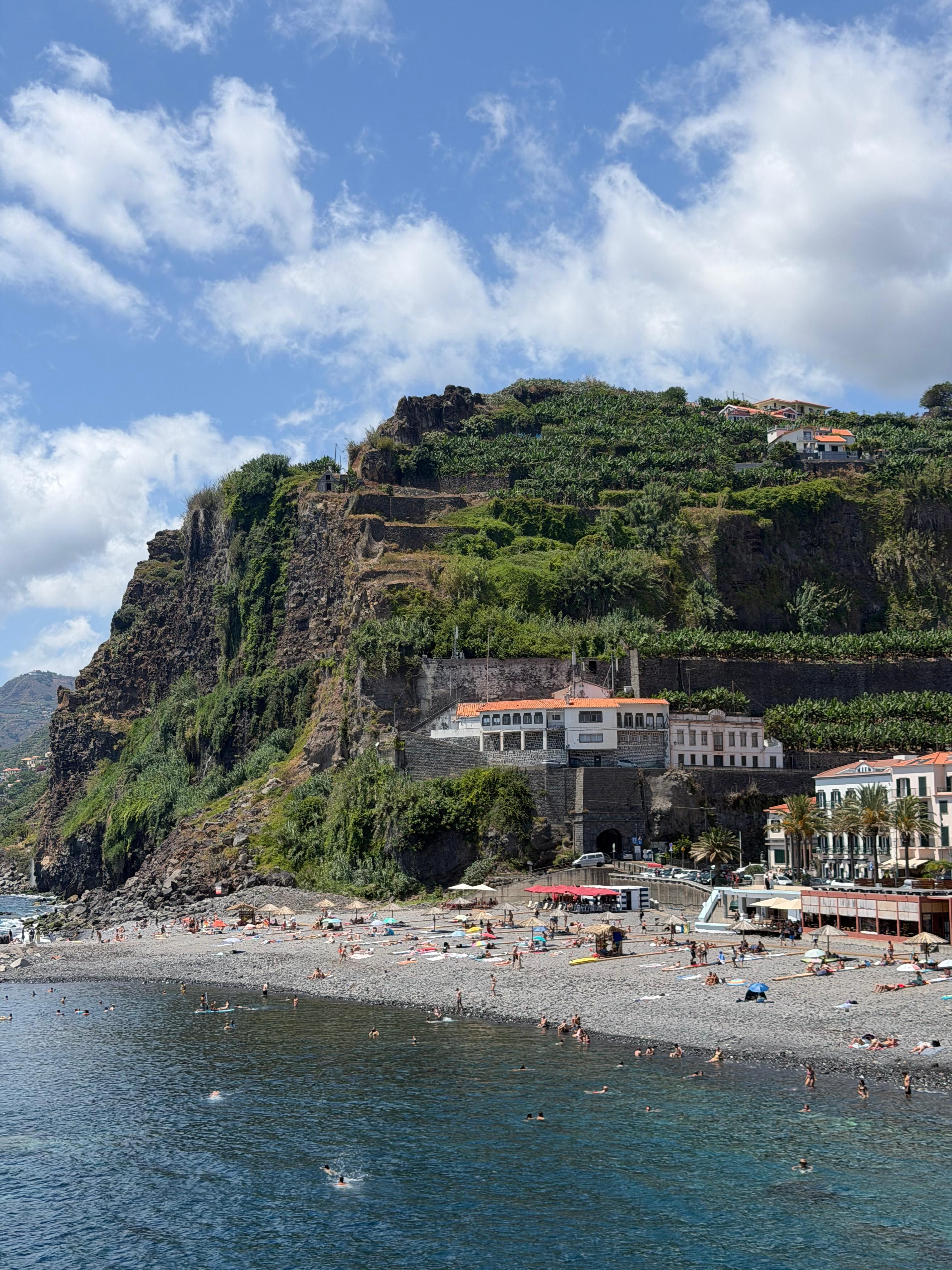
Summer is my favourite. Waking up with the sea all around you on a hot day, with any number of beaches to choose from, is a feeling that is hard to beat. The water is always good, the days go on forever, and I spend them at the beach with friends, then go out for dinner and stay out late. Even at night the temperature is just right for sitting outside.
My summer days start in the water. Reis Magos in Caniço is my favourite beach, and the beach below the airport runway is the one I share with friends. The best day ends in the west, watching the sunset from the bars of Paúl do Mar after a day at the beach in Ponta do Sol.
The downsides. The mountains still fill with cloud on summer afternoons, so go up early. Hire cars, automatics above all, run out in summer: book with your flights (see the car hire guide). And dry weather brings fire risk: in August 2024 wildfires closed trails in the central mountains.
Winter: Christmas, poncha and a quieter island
Winter in Madeira runs from November to February. Funchal averages 20 °C by day in January and 14.3 °C at night, and in 30 years of records the city has never had a frost: the coldest night was 8.5 °C, in 2011. It is also the wettest time of year, with about 9 rainy days in December, and the sea cools to around 18 °C.
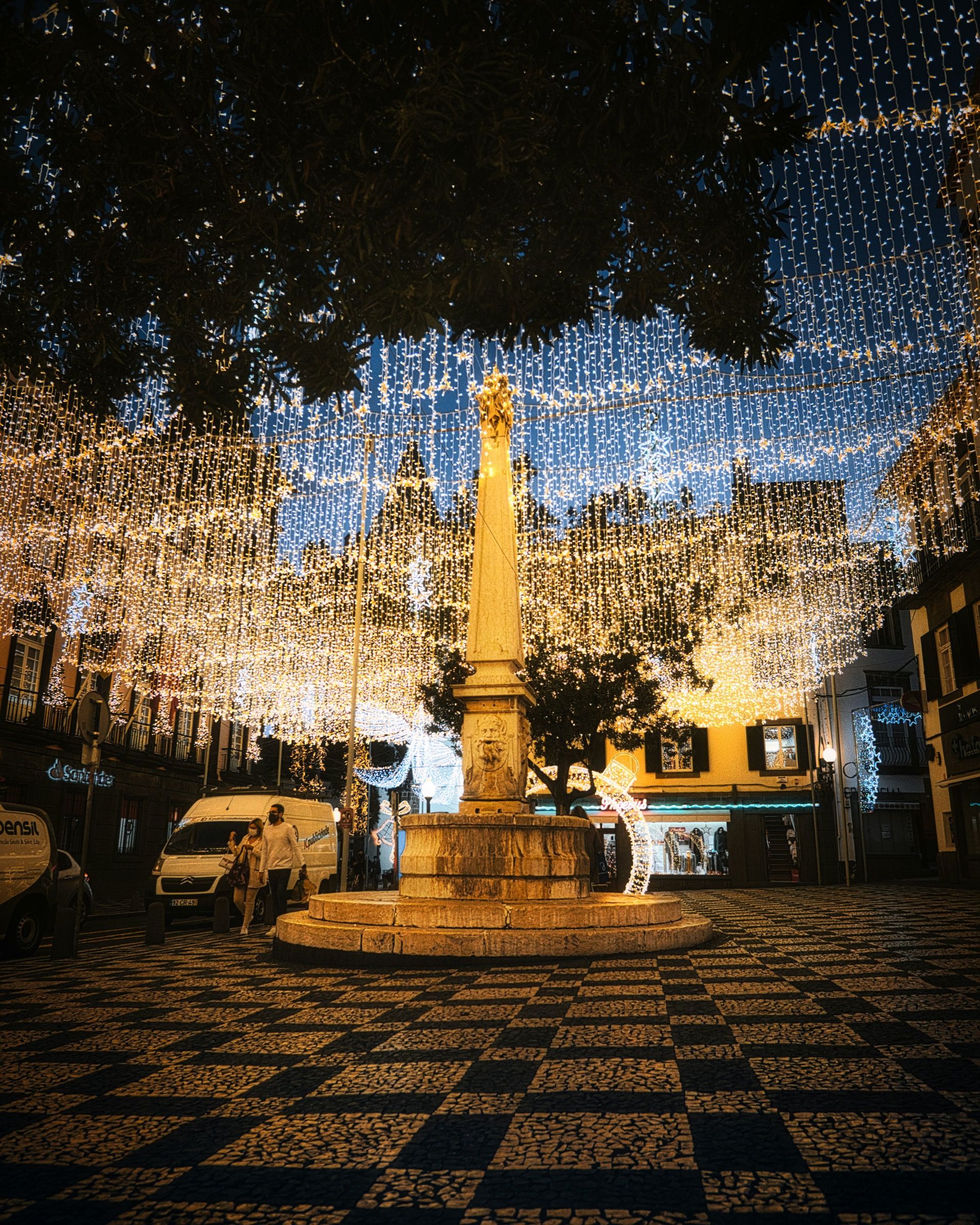
Winter here is never really cold, and it rarely rains for long. It is the season of Christmas, and Madeira does Christmas well: the whole of Funchal is lit up from 1 December, the markets fill the streets, and New Year’s Eve brings fireworks all around the bay. It is a family time of year, and you feel it everywhere. It is also when we drink our poncha without ice, to warm up.
Winter is the season I would choose for someone who wants to know the island rather than just enjoy the beach. The towns are lived in by Madeirans, the traditions are out in the street, and walking is comfortable all day. See Madeira in November and Madeira in December for those months, Christmas in Madeira for the festive season and New Year’s Eve in Madeira for the fireworks.
The downsides. Days are short, with sunset around 6pm in December. Rain and wind close mountain trails more often, so check the official trail status on the morning of every walk and keep a day spare. December as a whole is one of the quieter months, but the week of 31 December is the busiest and most expensive of the winter, so book it early.

Madeira weather by month
Average daytime high, night-time low and rainy days in Funchal. The bars show the daytime high.
- Jan 20° C high, 14° C low, 6 rainy days
- Feb 20° C high, 14° C low, 6 rainy days
- Mar 21° C high, 14° C low, 6 rainy days
- Apr 21° C high, 15° C low, 5 rainy days
- May 22° C high, 16° C low, 3 rainy days
- Jun 24° C high, 18° C low, 1 rainy day
- Jul 25° C high, 20° C low, 0 rainy days
- Aug 27° C high, 21° C low, 0 rainy days
- Sep 27° C high, 20° C low, 3 rainy days
- Oct 25° C high, 19° C low, 7 rainy days
- Nov 23° C high, 17° C low, 7 rainy days
- Dec 21° C high, 16° C low, 9 rainy days
Summer Winter In between
Source: IPMA climate normals 1991–2020, Funchal station (58 m). Rainy days are days with at least 1 mm of rain. Sea temperature: Visit Madeira: weather in Madeira. Daylight calculated for Funchal around the solstices.
Spring and autumn, in between
March to May and October borrow a little from each season.
Spring, March to May, is when the island is in flower and the Flower Festival fills Funchal. Days are mild, around 21 °C in April, rain eases off month by month, and the sea is still cool.
October still feels like summer by day, at 25.2 °C on average in Funchal, and the sea is still warm. It is also when the rain comes back: October averages 91.2 mm in Funchal, nearly as much as December.
- 3 February to 14 February 2027
Carnival
Two weeks of parades and parties in Funchal, in costume.
- 29 April to 30 May 2027
Flower Festival
Flower carpets in the streets and a flower parade through Funchal.
- 4 June to 27 June 2027
Atlantic Festival
The start of summer, with music and fireworks over Funchal bay.
- 22 August to 12 September 2027
Wine Festival
The grape harvest, with grape-treading, folk music and wine tastings in Funchal and Estreito de Câmara de Lobos.
- 1 December to 10 January
Christmas and New Year
Lights all over Funchal, the market night on 23 December and the fireworks at midnight on 31 December.
Festival dates: Visit Madeira, checked 22 October 2026.
Whatever the season, the island has several weathers
The averages above are for Funchal, on the sunny south coast.
The south coast is the warmest and driest part of Madeira. The north coast and the mountains are cooler, windier and wetter in every season, and it is common for Pico do Arieiro to be in fog while Funchal is in sunshine. A cloudy morning in your hotel does not mean a cloudy day everywhere, and the reverse is true too.
Plan by the day, not by the week. Look at the forecast and the webcams the evening before, put the mountains and the north on the clearest days, and keep the beach, Funchal and the easier levada walks for the rest. Every classified trail also needs a booking on SIMplifica, in any season.
Questions about the best time to visit Madeira
When is Madeira busiest?
August. In August 2026 the island’s tourist accommodation counted 1,399,000 nights, against 808,000 in December 2025: about 73% more (DREM). An average month in 2025 had about 1,075,000. In winter, the exception is the week of New Year’s Eve, when Funchal fills up for the fireworks.
What is the best month to visit Madeira?
It depends on what you want. For swimming and long days, August and September: Funchal averages 26.8 °C and 26.6 °C by day and it almost never rains (IPMA). For Christmas, December. For mild weather with fewer hot days, April and May. There is no month to avoid.
Is Madeira warm in winter?
Mild rather than warm. In January Funchal averages 20 °C by day and 14.3 °C at night, and in 30 years of records it has never had a frost; the coldest night was 8.5 °C in 2011 (IPMA). The mountains are much colder.
Is it worth visiting Madeira in November?
Yes, if you come for walking, towns and food rather than for a beach week. Funchal still averages 22.8 °C by day, but November has about 7 rainy days in the city and more in the mountains, where rain and wind can close trails. Keep a free day for bad weather.
What is the rainiest month in Madeira?
December in Funchal, with 94.8 mm over about 9 days, followed by October (91.2 mm) and November (80.3 mm). July and August are almost dry. The north coast and the mountains get more rain than Funchal in every season.
When is the sea warmest in Madeira?
From August to October. Visit Madeira gives about 24 °C in summer and 18 °C in winter, and long-term monthly averages keep the sea at its warmest into October, after the air has started to cool.
Can you swim in Madeira in winter?
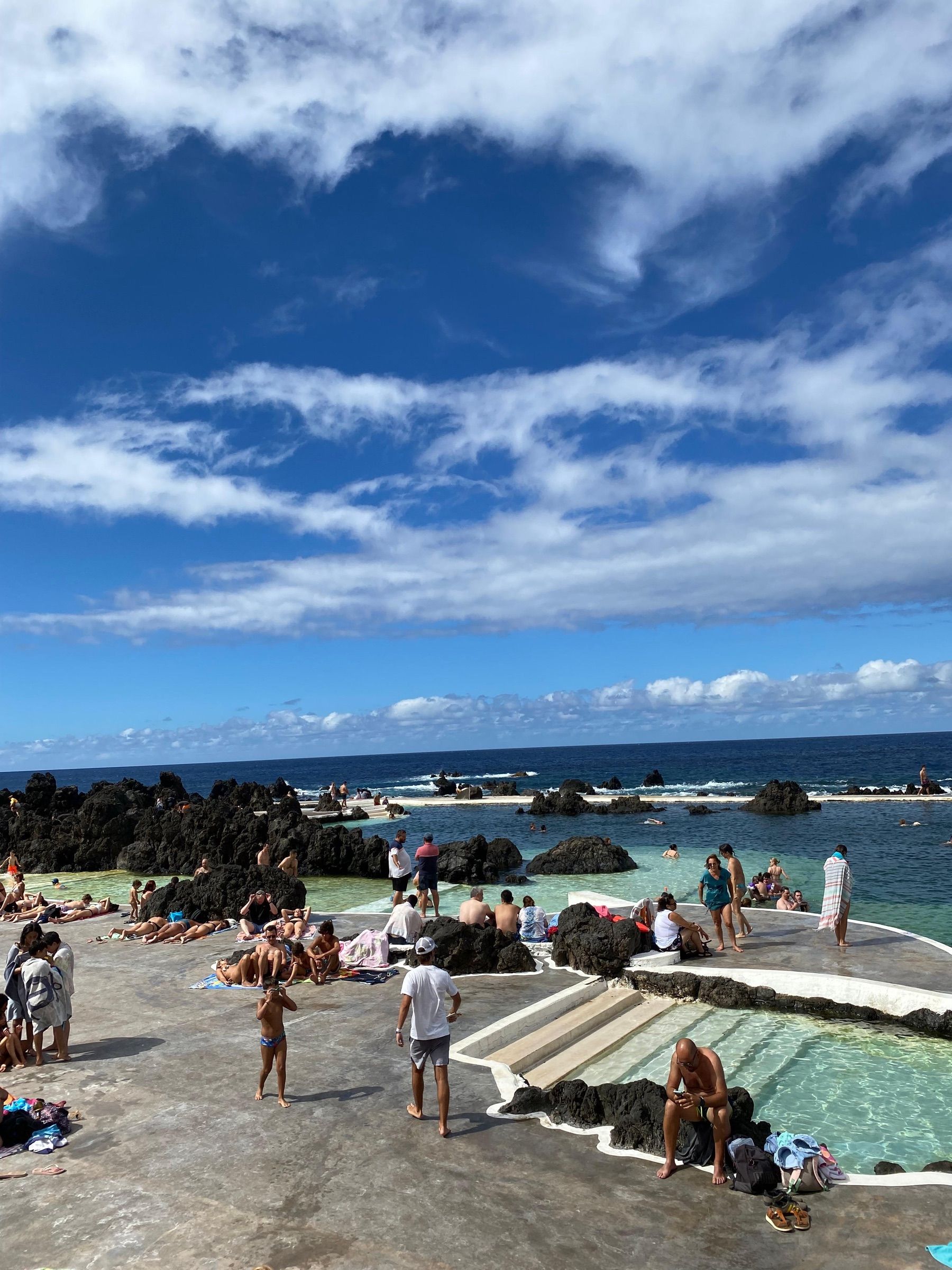
You can, but few people do, locals included. The sea is around 18 °C in winter (Visit Madeira), warmer than much of Europe but cold to stay in for long. If you want to try, pick sheltered spots on the south coast, because winter swell can close the natural pools on the north coast.
Picked your season?
Tell us your dates and what you love doing, and we plan a route that fits the time of year, with a plan B for rain on every day. A personal plan from our family is €149 for up to 5 days (€199 for 6 to 8), ready in 48 hours.